What are loop checks
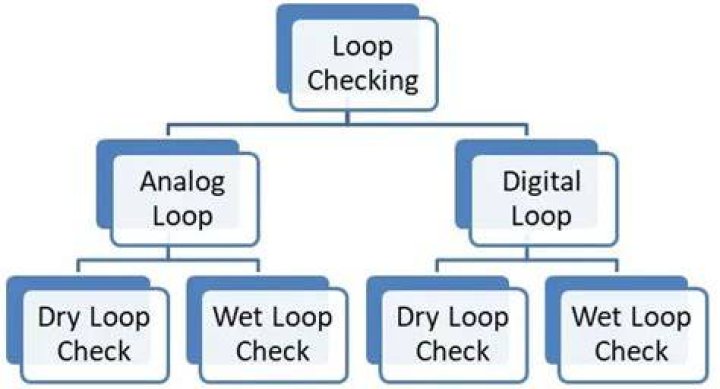
The Loop checking is defined as pre-Commissioning activity which is initiated after installation of instruments in the field and carry out the instrument loop checks between installed field instrument and respective control system i.e. PLC or DCS.
How do you test a pressure transmitter loop?
- Watch the valve move.
- Read position feedback.
- Read-back loop current.
How do you perform a loop test?
- Skip the entire loop.
- Make 1 passes through the loop.
- Make 2 passes through the loop.
- Make a passes through the loop where a<b, n is the maximum number of passes through the loop.
What are the 3 types of loops?
Visual Basic has three main types of loops: for..next loops, do loops and while loops.
What is loop power?
The term loop-powered simply means that the device in question receives its power from the 4-20 mA process signal connected to the device. … Loop-powered devices are simple, easy to wire and use very little power.
What are the 4 types of loops?
Sr. No.Loop Type1.While Loop2.Do-While Loop3.For Loop
What is loop calibrator?
Loop calibrators are a type of electrical calibrator specifically designed to troubleshoot 4-20 mA current loops. … These versatile instruments are capable of measuring current, sourcing current to unpowered devices in a loop, as well as simulating the operation of loop-powered 4-20 mA transmitters.
What do while loops do?
The while loop is used to repeat a section of code an unknown number of times until a specific condition is met. For example, say we want to know how many times a given number can be divided by 2 before it is less than or equal to 1.
How do loops work?
A “For” Loop is used to repeat a specific block of code a known number of times. For example, if we want to check the grade of every student in the class, we loop from 1 to that number. When the number of times is not known before hand, we use a “While” loop.
What types of loops can be tested?
- Simple Loop Testing: Testing performed in a simple loop is known as Simple loop testing. …
- Nested Loop Testing: Testing performed in a nested loop in known as Nested loop testing. …
- Concatenated Loop Testing: …
- Unstructured Loop Testing:
Article first time published on
What is loop testing with example?
Loop Testing is a kind of software testing that focuses exclusively on the correctness of loop constructions. It is a component of Control Structure Testing (path testing, data validation testing, condition testing). Loop testing is an example of white-box testing. This approach is used to test software loops.
When should you stop testing?
- When we run out of time.
- When the testers and/or the test environment are all re-deployed for another test.
- When the project budget runs out.
- When we have reached an acceptable level of risk.
- When all the defects have been found.
What is looping in electrical wiring?
Electrical looping is loop/loops created between two light with 1 single wire connected to multiple fittings. Usually looping is done for neutral wire. … That is it carries electricity from the output device back to the service panel/board. As neutral wire carries charge while returning, it doesn’t get heated up much.
What voltage is a 4 20ma signal?
The range of voltage over which the loop will function is called its Compliance Voltage. Common values for 4-20 mA loop supplies are 24VDC or 36VDC.
What is a voltage loop?
Understanding Loops in a Circuit KVL depends upon the concept of a loop. A loop is any closed path through the circuit which encounters no node more than once. Essentially, to create a loop, start at any node in the circuit and trace a path through the circuit until you get back to your original node.
What is the significance of using calibrated loops?
Calibrated loops are routinely used to set up quantitative urine cultures (5, 17). Calibrated loops are designed to transfer a well-defined sample volume to agar plates, omitting the need for dilutions. They may be reusable (loops made of nichrome or platinum) or disposable (loops made of plastic).
What is the difference between source and simulate?
What is the difference between “Source” and “Simulate” in a milliamp calibrator? Source will actually output a 4mA to 20mA signal based on the value selected. Simulate does not output anything but rather controls the current flow from an external source to be within 4mA to 20mA.
How do you zero check a level transmitter?
Open the equalize valve E1 on the high pressure, HP, (upstream) side of the transmitter. Do not open the low side equalize valve, E2, before the high side equalize valve. Doing so will over-pressure the transmitter. After zeroing the transmitter, close equalize valve E2 on the low pressure side of the transmitter.
How do you calibrate a level transmitter?
Fill the level transmitter chamber with water up to the 100% level. Read the level measurement in the transmitter LCD (or in the HART communicator). Set this condition as 100% level through HART communicator. Read the mA output of the transmitter by using a multimeter.
What is the use of level transmitter?
Level transmitters provide continuous level measurements over the range of the system rather than at a single point and produce an output signal that directly correlates to the level in the vessel. The output signal generated can be used to display the depth or to actuate control functions.
Why are loops used?
Definition: Loops are a programming element that repeat a portion of code a set number of times until the desired process is complete. Repetitive tasks are common in programming, and loops are essential to save time and minimize errors. … Why We Use Loops: Loops make code more manageable and organized.
What are the 2 types of loops?
Two major types of loops are FOR LOOPS and WHILE LOOPS. A For loop will run a preset number of times whereas a While loop will run a variable number of times. For loops are used when you know how many times you want to run an algorithm before stopping.
How many loops are there?
There are mainly two types of loops: Entry Controlled loops: In this type of loops the test condition is tested before entering the loop body. For Loop and While Loop are entry controlled loops. Exit Controlled Loops: In this type of loops the test condition is tested or evaluated at the end of loop body.
How many times does a loop execute?
Probably the simplest answer to this question is, the loop will run as many times as it takes, until a condition is met. This means that a for loop could run zero times, 1 or more, or even infinite… all depending upon the condition.
What is the value of i after the for loop?
After the loop exists, the value of i must be zero, and that is what is printed. However, the starting value of i is 1. That it happens to print 0 is just a fluke, because your program invokes undefined behaviour: Each iteration you increment it by 1.
When would you use a while loop?
The while loop is used when we don’t know the number of times it will repeat. If that number is infinite, or the Boolean condition of the loop never gets set to False, then it will run forever.
Which is better for or while loop?
In general, you should use a for loop when you know how many times the loop should run. If you want the loop to break based on a condition other than the number of times it runs, you should use a while loop.
What is meant by for loop?
In computer science, a for-loop (or simply for loop) is a control flow statement for specifying iteration, which allows code to be executed repeatedly. … The name for-loop comes from the word for, which is used as the keyword in many programming languages to introduce a for-loop.
What is the difference between for loop and while loop?
The difference between for loop and while loop is that in for loop the number of iterations to be done is already known and is used to obtain a certain result whereas in while loop the command runs until a certain condition is reached and the statement is proved to be false.
How do you write a test case for a for loop?
- Check whether you can bypass the loop or not. …
- Check whether the loop control variable is negative.
- Write one test case that executes the statements inside the loop.
- Write test cases for a typical number of iterations through the loop.
What is meant by smoke testing?
Smoke testing, also called build verification testing or build acceptance testing, is nonexhaustive software analysis that ascertains that the most crucial functions of a program work but does not delve into finer details. Smoke testing is the preliminary check of the software after a build and before a release.