What does dagda mean
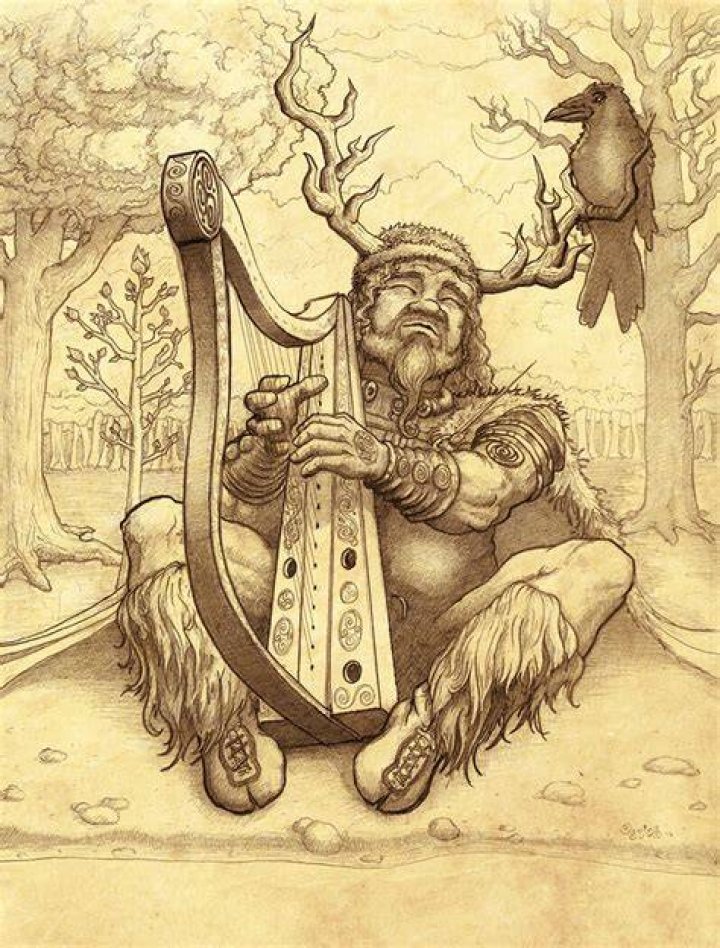
Dagda, (Celtic: “Good God”) also called Eochaid Ollathair (“Eochaid the All-Father”), or In Ruad Ro-fhessa (“Red [or Mighty] One of Great Wisdom”), in Celtic religion, one of the leaders of a mythological Irish people, the Tuatha Dé Danann (“People of the Goddess Danu”).
Who is the Celtic god of death?
Arawn is the Celtic god of the underworld of the dead. His most famous tale involves him switching places with Pwyll for a year and a day to challenge Hafgan, Arawn’s rival for ownership of the underworld. During the time they were switched, Pwyll defeated Hafgan and was rewarded with pigs.
Who is the Celtic god of healing?
In Irish mythology, Dian Cécht (Old Irish pronunciation [dʲiːən kʲeːxt]; also known as Cainte or Canta) was the god of healing, the healer for the Tuatha Dé Danann, and son of the Dagda according to the Dindsenchas.
Who is the Celtic all father?
The Dagdais a powerful Irish god, also known as Eochaid Ollathair (“All Father”), Ruad Rofhessa(“Lord of Great Knowledge”), or Lord of the Heavens.
Who killed Dagda?
He is credited with a seventy- or eighty-year reign (depending on source) over the Tuatha Dé Danann, before dying at the Brú na Bóinne, finally succumbing to a wound inflicted by Cethlenn during the second battle of Magh Tuiredh.
Who is the most powerful Celtic god?
Lug was also known in Irish tradition as Samildánach (“Skilled in All the Arts”). The variety of his attributes and the extent to which his calendar festival Lugnasad on August 1 was celebrated in Celtic lands indicate that he was one of the most powerful and impressive of all the ancient Celtic deities.
How do you honor Dagda?
Honoring the Dagda Today Place symbols of abundance and bounty on your altar, filled with things you have made or grown—loading up a large cauldron with vegetables from your garden or home baked food is a great way to show gratitude for the plentiful things in your life.
Who is the oldest Celtic goddess?
1) Ana or Danu/Dana – The Primordial Goddess of Nature Counted among the oldest of the ancient Celtic gods in Ireland, Ana (also known as Anu, Dana, Danu, and Annan) possibly embodied the primordial scope, with her epithets describing her as a mother goddess.
Who is the top god?
Vishnu. Vaishnavism is the sect within Hinduism that worships Vishnu, the preserver god of the Hindu Trimurti (the Trinity), and his many incarnations. Vaishnavites regard him to be eternal and the strongest and supreme God .
What is the harp of Dagda?
The Dagda played the harp for his men when they were about to go into battle to make them forget their fear and think only of defeating their enemies. On returning from battle he would play the harp to make them forget their wounds and sadness over lost comrades and think only of the glory of winning.
Article first time published on
Who are the Morrigan?
The Morrigan is one of the many prominent figures to feature in Irish mythology and is primarily associated with war / battle, fate and death. She is a gifted shape shifter and is known to favour changing into the crow. The Morrigan was one of the Tuatha De Danann, who were the folk of the Goddess Danu.
Who is the supreme god in Norse mythology?
The supreme god is Odin. He has just one eye as he gave the other to Mímir in order to be allowed to drink from the source of wisdom – “Mímir’s well”. Odin is the god of war and of the dead.
Who is the Viking god of healing?
Eir, however is the preeminent and principal healer in Northern tradition. Before the rise of the male dominated medical institutions of Europe, the healing and medical care of the community in Norse and Germanic countries was largely the sphere of women.
Who is the god of anxiety?
In Greek mythology, Oizys (/ˈoʊɪzɪs/; Ancient Greek: Ὀϊζύς, romanized: Oïzýs) is the goddess of misery, anxiety, grief, and depression.
What is the god of death called?
Hades, also called Pluto is the God of death according to the Greeks. He was the eldest son of Cronus and Rhea. When he and his brothers divided the cosmos, he got the underworld.
Who is Mandrakes son in epic?
Dagda was born on a wild festive night as the son of Mandrake, the leader of the Boggans, and came to idolize him at a young age. Dagda was raised by his father to become a strong warrior and a proud prince. Despite growing up surrounded by darkness and death, he had a felicitous childhood.
What God is Danu?
Danu, also spelled Anu, or Dana, in Celtic religion, the earth-mother goddess or female principle, who was honoured under various names from eastern Europe to Ireland.
Who was Brigid?
Brigid (/ˈbrɪdʒɪd, ˈbriːɪd/ BRIJ-id, BREE-id, Irish: [ˈbʲɾʲɪjɪdʲ, ˈbʲɾʲiːdʲ]; meaning ‘exalted one’ from Old Irish), Brigit or Bríg is a goddess of pre-Christian Ireland. She appears in Irish mythology as a member of the Tuatha Dé Danann, the daughter of the Dagda and wife of Bres, with whom she had a son named Ruadán.
Who is BADB?
In Irish mythology, the Badb (Old Irish, pronounced [ˈbaðβ]), or in Modern Irish Badhbh (Irish pronunciation: [ˈbˠəu], Munster Irish: [ˈbˠəiw])—also meaning “crow”—is a war goddess who takes the form of a crow, and is thus sometimes known as Badb Catha (“battle crow”).
Who was Aengus?
In Irish mythology, Aengus or Óengus, also called Mac and Óic, is one of the Tuatha Dé Danann and probably originally a god associated with youth, love, summer and poetic inspiration.
Who is the Irish goddess of war?
1. The Morrigan. What is this? Known as the Celtic Goddess of war, the Morrigan is also known as the “Phantom Queen” or the “Queen of Demons”.
Is cernunnos an Irish God?
Cernunnos was an ancient Celtic god who represented nature, flora and fauna, and fertility. He is frequently depicted in Celtic art wearing stag antlers or horns and usually a torc around his neck.
Who is goddess Rhiannon?
Rhiannon, in Celtic religion, the Welsh manifestation of the Gaulish horse goddess Epona and the Irish goddess Macha. She is best-known from The Mabinogion, a collection of medieval Welsh tales, in which she makes her first appearance on a pale, mysterious steed and meets King Pwyll, whom she marries.
Who was the 1st God?
Brahma is the Hindu creator god. He is also known as the Grandfather and as a later equivalent of Prajapati, the primeval first god. In early Hindu sources such as the Mahabharata, Brahma is supreme in the triad of great Hindu gods which includes Shiva and Vishnu.
Who was the ugliest god?
Facts about Hephaestus Hephaestus was the only ugly god among perfectly beautiful immortals. Hephaestus was born deformed and was cast out of heaven by one or both of his parents when they noticed that he was imperfect. He was the workman of the immortals: he made their dwellings, furnishings, and weapons.
Which God is still alive?
One of the most popular Gods in Hinduism – Lord Hanuman – is worshipped by millions of devotees. Tales of his courage, bravery, strength, innocence, compassion and selflessness have been passed down to generations. And it is believed that Lord Hanuman is still alive.
Who did Celts worship?
The Celtic religion, druidism, was closely tied to the natural world and they worshipped their gods in sacred places like lakes, rivers, cliffs and bushes. The moon, the sun and the stars were especially important, the Celts thought that there were supernatural forces.
Is Celtic Irish or Scottish?
Today, the term Celtic generally refers to the languages and respective cultures of Ireland, Scotland, Wales, Cornwall, the Isle of Man, and Brittany, also known as the Celtic nations. These are the regions where four Celtic languages are still spoken to some extent as mother tongues.
Did the Scottish have gods?
It is generally presumed to have resembled Celtic polytheism. The names of more than two hundred Celtic deities have been noted, some of which, like Lugh, The Dagda and The Morrigan, come from later Irish mythology, whilst others, like Teutatis, Taranis and Cernunnos, come from evidence from Gaul.
Who is the Dagda's wife?
As chief of the Tuatha dé Danann, the Dagda fathered many children, chief among them being Aengus, Brigid, and Midir. His lovers were plentiful, but the most notable were his spouse, the fearful Morrigan, and the river goddess Boann.
Where did the Fomorians come from?
Geoffrey Keating in his 17th-century book History of Ireland states that the Fomorians were Canaanites who left Canaan because of Noah’s curse. The Formorians feared that they could not win a war with the sons of Shem so they escaped to the sea. Formorians were pirates, pillaging the coastal cities.