What is a MRP system
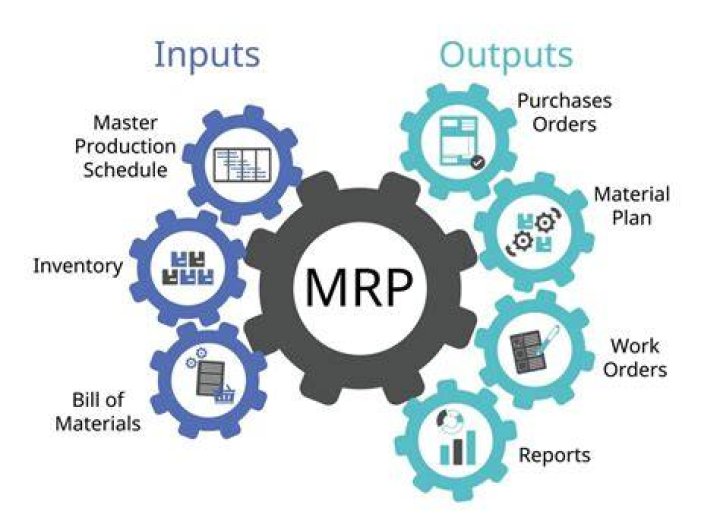
Material Requirements Planning (MRP) is a standard supply planning system to help businesses, primarily product-based manufacturers, understand inventory requirements while balancing supply and demand.
What is MRP and ERP and how are they related?
MRPs (Material Requirements Planning) are a great way for manufacturers to manage their shops and include inventory, capacity planning, and scheduling features. However, ERPs (Enterprise Resource Planning) are an even better way for manufacturers to take control of their shops.
Is SAP a ERP system?
SAP S/4HANA Cloud is a future-ready enterprise resource planning (ERP) system with built-in intelligent technologies, including AI, machine learning, and advanced analytics.
What is considered an ERP system?
Definition of enterprise resource planning (ERP) Enterprise resource planning (ERP) refers to a type of software that organizations use to manage day-to-day business activities such as accounting, procurement, project management, risk management and compliance, and supply chain operations.
What is ERP in manufacturing industry?
What is Manufacturing ERP (Enterprise Resource Planning)? Manufacturing ERP refers to Enterprise Resource Planning (ERP) software and systems used to plan, manage and deliver specific functionalities that support manufacturers and manufacturing business operations.
What is ERP give some examples?
Enterprise resource planning (ERP) refers to a type of software that organizations use to manage day-to-day business activities such as accounting, procurement, project management, risk management and compliance, and supply chain operations.
What is an MRP II system and how is it different from the ERP systems in use today?
Manufacturing Resource Planning (MRP II) is an integrated information system used by businesses. … An ERP management information system integrates areas such as planning, purchasing, inventory, sales, marketing, finance, and human resources.
What is ERP in simple terms?
Enterprise resource planning(ERP) is a process used by companies to manage and integrate the important parts of their businesses. … An ERP software system can also integrate planning, purchasing inventory, sales, marketing, finance, human resources, and more.
What are the different types of ERP?
There are three main types of ERP systems that function with different deployment model options. The most common types of ERP systems include cloud ERP, on-premise ERP, and hybrid ERP.
Is SAP an MRP system?
Material Requirements Planning (MRP), a module in SAP ERP, is a planning tool to help production and procurement planners create feasible and realistic plans so they can quickly initiate the procurement or production processes.
Article first time published on
Is SAP HANA and ERP?
A fast and powerful database that provides real-time, multi-model data analytics, SAP HANA serves as a platform for enterprise resource planning (ERP) software and other business applications.
Is Sage an ERP system?
Sage Intacct provides innovative ERP automation that lowers your costs, increases security, and improves productivity. … With Sage Intacct, we’ve gained a world-class product in an easy-to-use package without the huge expense of a traditional ERP system like Oracle or SAP.
What industries use ERP?
- Manufacturing. ERP software is increasingly beneficial to the manufacturing sector. …
- Healthcare. A healthcare ERP software system can help you handle daily activities in the sector, including the procurement and sourcing of essential items. …
- Hospitality. …
- Waste Management. …
- Education. …
- Retail. …
- Construction.
How does an ERP system help manufacturing?
Manufacturing ERP is a centralized method of managing every aspect of facility operations and processes, from production to payroll. ERP allows for unprecedented visibility, coordination and management across the disparate processes that make up a business — ultimately resulting in greater operational efficiency.
Is Epicor and ERP system?
Epicor provides enterprise resource planning (ERP), customer relationship management (CRM), supply chain management (SCM), and human capital management (HCM) software to business customers in both software as a service (SaaS) and on-premises deployment models.
What is the difference between MRP and MRP II?
MRPMRP IIStands for Material Requirements Planning.Stands for Manufacturing Resource Planning.Developed in 1970s.Developed in 1980s.
What are the top 10 ERP system?
- Odoo. …
- Sage X3. …
- Infor CloudSuite. …
- IFS. …
- SAP S/4HANA. …
- Oracle ERP Cloud. …
- Oracle Netsuite. …
- Microsoft D365. Coming in at number one is a new number one, which is last year’s number two system, and that is Microsoft D365.
Is Microsoft 365 an ERP?
Microsoft Dynamics 365 is a product line of enterprise resource planning (ERP) and customer relationship management (CRM) intelligent business applications announced by Microsoft in July 2016 and released on November 1, 2016.
What is the difference between ERP and SAP?
ERP are software solutions that helps organizations to manage their business processes. SAP is multinational company that sells ERP software solutions to business. 2. It is a centralized system that streamline all processes.
What is the importance of ERP system?
Enterprise Resource Planning (ERP) is business management software that allows an organization to leverage a suite of integrated applications. ERP systems streamline and automate processes, creating a leaner, more accurate and efficient operation. ERP provides complete visibility into core business processes.
What does ERP stand for in SAP?
ERP stands for “enterprise resource planning.” ERP software includes programs for all core business areas, such as procurement, production, materials management, sales, marketing, finance, and human resources (HR).
What is an SAP system?
SAP, or Systems Applications and Products, is a widely-used enterprise resource planning (ERP) software SAP creates a centralized system for businesses that enables every department to access and share common data to create a better work environment for every employee in the company.
Which ERP is used by IBM?
Solution description : Version 20 ERP is American Software’s enterprise resource planning system for the IBM System z® computing platforms. Version 20 is a proven, time-tested ERP system including logistics, manufacturing and financial systems.
What is difference between Hana and s4hana?
The Key Difference between SAP HANA & SAP S/4 HANA SAP HANA is an in-memory database technology which acts as the core technology for a lot of other SAP or non-SAP applications whereas SAP S/4 HANA is a new generation ERP solution which runs on SAP HANA database architecture.
What is the name for SAP S 4 Hana core?
SAP S/4HANA is an abbreviation of SAP Business Suite 4 SAP HANA, an enterprise resource planning (ERP) software package. … Generation 4 is the first SAP Business Suite to run only on the proprietary SAP HANA (High-Speed Analytical Appliance) database platform.
Is Sage 100 an ERP?
Sage 100 ERP (formerly Sage ERP MAS 90, 200, and 200 SQL) business management software offers a broad range of modules designed to meet the many needs of virtually any business. … Sage 100 Premium ERP* provides a superior ERP solution with robust features and functionality and the efficiency of Microsoft® SQL Server®.
Is Sage 200 an ERP system?
Sage 200 is a powerful business management solution – it comes in two levels, choose from Standard and Professional based on your needs. … For businesses with more complex processes, Sage 200 Professional provides a fully featured ERP solution. Manage everything from financials to inventory and customer relationships.
Is Sage 50 ERP?
Sage 50 is one of the software products comprising Sage ERP. Besides Sage Intacct, other Sage ERP products are Sage 100 ERP, Sage 300, and Sage X3. ERP is enterprise resource planning. Sage 50cloud has three cost-effective pricing plans, offering a different version of Sage with more features and users at each level.
Can ERP or MRP be used for service industries?
Although originally intended exclusively for the manufacturing and fabrication industries, MRP is applicable to almost any industry, including the service industry. This is because MRP focuses on two universal concerns of business — customers and resources.
What are the disadvantages of ERP?
- Costs of an ERP Software. Third-party software add-ins. Implementation costs. …
- Complex Data Conversion. Developing a solid data conversion strategy can be difficult. …
- Requires thorough training. Training needs to cover all of the ERP system’s features.
What are the benefits reported from implementing ERP?
ERP increases efficiency and productivity by helping users navigate complex processes, preventing data re-entry, and improving functions such as production, order completion and delivery. Streamlined, efficient processes throughout.