What is Kathak style
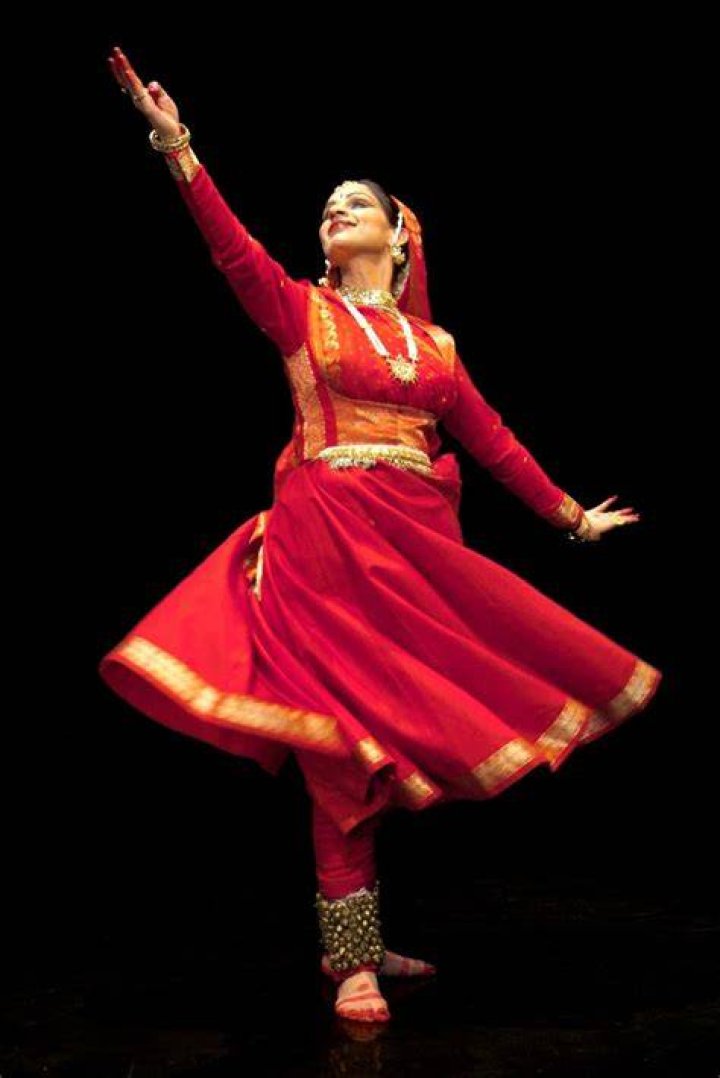
The origin of Kathak is traditionally attributed to the traveling bards in the of ancient northern India known as Kathakars or storytellers. … Stylistically, the Kathak dance form emphasizes rhythmic foot movements, adorned with small bells (Ghungroo) and the movement harmonized to the music.
What are the Kathak terms?
- laya. rhythm or tempo. …
- Taal. very important concept in Classical Indian dance and music; it is a group of certain beats and a measurement of time which calculates the number of beats utilized in a certain time period. …
- Matra. beats. …
- Tali. also called Bhari; means clapping. …
- Khali. …
- Avartan. …
- Sum. …
- Tatkar.
What is the difference between Toda and Tukda?
It then comprises of Thaat (stylised poses with movements of limbs by the dancer), Tukda (Single rotation of any tal (rhythm) or bol (rhythm) of lesser matra), Toda (group of the basic Kathak syllables that usually start on sam (the first beat) and after two or more cycles end on Sam), Tihai (footwork composition …
What is Kathak Paran?
A paran is a composed drum piece for the North Indian pakhеvaj or tablе drums, and. it is also choreographed for kathak dance. Paran refers specifically to a type of pakhеvaj. composition whose structure and compositional attributes are greatly varied.
What is the difference between Kathak and Bharatnatyam?
In Bharatanatyam, the dancer uses many mudras and hip movements. … But in Kathak, the dancer dances throughout in a standing posture. There are limited or no hip movements. Bharatanatyam is a dance form which is based or evolved from the stories of Shiva and Kathak focuses more on the tales of Radha and Krishna.
How many mudras are there in Kathak?
The language of mudra is based on 24 mudras enumerated in the Natyashastra and 28 in the Abhinaya Darpana. Single-handed gestures are called asamyukta, and those that use both hands are called samyukta.
Which state is famous for Kathak?
2) Kathak, Uttar Pradesh/North India Another popular and recognised form of classical Indian dance is Kathak that originated from Uttar Pradesh in north India.
How many Taal are there in Kathak?
72 melakarta talasand 108 anga talas.
What is Khali in Kathak?
The word khali means empty. Khali is the rest point of a Tal. The Tabla player stops playing left Tabla on the syllables of Khali.
What is Paran Judi Amad?
Description: Paran amad is one of the common intra-forms (or items) that make a Kathak recital. It is an essay in pure dance. In this article to see how the ‘look’ of a paran amad depends on the character and knitting of its syllables, and on the accord of this syllabic content with bodily figuration.
Article first time published on
What is Tatkar in Kathak?
Tatkar is footwork. The patterns and styles vary greatly and emphasis is placed on producing a sound from the feet as well as from the ghungharoos (bells). Most Kathak performances feature tatkar, which highlights a dancer’s technical skill, stamina, and artistry.
What is a BOL in Kathak?
Tablā: A percussion instrument often used as an accompaniment to Kathak dance. It is comprised of two drums. Bol: A Bol is a sound or syllable. Helps identify and recite rhythms. … Duration between beats determines Laya of a Tāl or a Tāl based composition.
What is toda Tukda in Kathak?
Tukda is a short composition of dance bols strung together. They usually start on the ‘Sam’ (first beat) and also ends on a ‘Sam’. This is after one avartan or more than one avartan of any time cycle. #kathak #kathakdance #kathakclasses.
Is Kathak like Bharatanatyam?
Bharatanatyam vs Kathak The difference between Bharatanatyam and Kathak is that Bharatanatyam is a dance that is generally evolved or based on Shiva’s stories. On the other hand, Kathak evolves or is based on tales or stories of Radha and Krishna.
Does Kathak have arangetram?
Arangetram can be done for other Indian classical dance styles such as Kathak, Kuchipudi, Manipuri, Kathakali, Bharatanatyam, Mohiniattam and vocal and instruments like Mridangam, ghatam, and violin.
Which is the toughest dance form?
- Ballet. The first one to top our list of the world’s most difficult dance forms is Ballet. …
- Synchronized Swimming Dance. …
- Irish Dance. …
- Aerial Dance. …
- Can-Can. …
- Tap Dance. …
- Tango. …
- Kuchipudi.
What is the Indian dance called?
The Sangeet Natak Akademi currently confers classical status on eight Indian classical dance styles: Bharatanatyam (Tamil Nadu), Kathak (North, West and Central India), Kathakali (Kerala), Kuchipudi (Andhra & Telangana), Odissi (Odisha), Manipuri (Manipur), Mohiniyattam (Kerala), and Sattriya (Assam).
Which dance is only performed by females?
The correct answer is Khoria dance. The Khoria dance is performed only by women at weddings and festivals.
Which classical dance is easiest?
Bharatnatyam (Indian classical dance form) for Beginners.
Does Kathak help lose weight?
Kathak is a demanding dance that can really help us get rid of those extra kilos and stay fit. All the Kathakars (or Kathak dancers) have to practice and perform wearing heavy ankle bells, which makes for a weight-bearing exercise.
Is Kathak difficult to learn?
The learning of the various foot movements in Kathak is one of the most challenging parts of learning this dance form. Like every other thing, it will need regular practice. Moreover, the incorporation of various “taals” and “laya” makes the Kathak dance form a bit difficult to master.
How many years does it take to learn Kathak?
It will take a minimum of 2 years if you put great concentration. Minimum of 3 years and a maximum of 9 years is required for any classical dance form, but you can learn faster than classical any form. It takes solidly 3 years.
What is Sam in Kathak?
What is ‘sam’ in Kathak? Sam is the first beat of a taal. i.e. musical meter in the Indian Classical Music System. In a cyclic rhythm, it is necessary to fix one beat as the initial beat of the cycle.
What is Sam Tal in music?
The sam is the first beat of the cycle in the north Indian system of tal. The word sam literally means to “conjoin” or “come together”. The sam has a special significance in both the performance and theory of North Indian music.
What is Avartan music?
The avartan is the cycle in North Indian Music. It is composed of measures (vibhag) which are in turn composed of beats (matra). The avartan is in some ways comparable to the Western cycle (e.g. a 16 bar blues pattern) with but a few differences.
What is the Bol of Dadra Taal?
Dadra tal is six or three beat tal which is extremely common in the the lighter forms of music. It is is commonly found in qawwalis, film songs, bhajans, gazals, and folk music throughout India. The name is derived from its association with the dadra style of singing.
Who made ragas?
Balamurali, a legend, who created ragas with three swaras – The Hindu.
Which type of dance form is Kathak?
Native to North India, Kathak (pronounced “Kah-tahk”) is one of six Indian classical dance forms. Kathak originated within Hindu temples as a storytelling device for portraying the epic tales from Hindu scriptures, Mahabharata and Ramayana.
What is Parmelu in Kathak?
Parmelu – a piece that has bols that are inspired by nature and percussion instruments. A beautiful composition of GuruJi, Pandit Divyang Vakil, with movements taught to me by Guru Pali Chandra. …
What is the meaning of Paran?
Biblical Names Meaning: In Biblical Names the meaning of the name Paran is: Beauty, glory, ornament.
Where is the desert of Paran?
Biblical Paran It is often associated with Mount Sinai in Egypt, and there is some evidence that it may originally have referred to the southern portion of the Sinai Peninsula. However the Deuteronomy 1:1 text suggests it could be east of the Jordan River.