What is Losch Theory
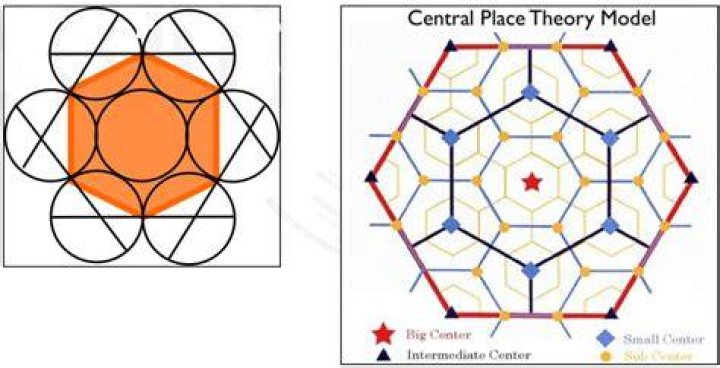
August Losch, a German economist, published his Theory of ‘Profit Maximisation’ in the year 1954. According to Losch, industry will not necessarily be located within the least cost (transport cost and labour cost) location; rather it would locate in areas where maximum profit will occur.
What is August Losch known for?
August Lösch (15 October 1906 – 30 May 1945) was a German economist, known for his seminal contributions to regional science and urban economics. … His magnum opus, Die räumliche Ordnung der Wirtschaft (The economics of location), appeared in 1940.
Who postulated profit maximization theory?
Essay # Merits of the Profit Maximisation Theory: 1. August Losch tried to restore a order in the former chaotic classifications of industrial location. 2. He was the first person to consider the influence of the magnitude of demand on industrial location.
How is the central place theory used?
Central Place Theory sought to explain the economic relationships of cities with smaller settlements. It also seeks to explain why cities are located where they are geographically and how they serve the surrounding smaller settlements with speciality goods and services.
What is central place theory PDF?
• Relationship between the size, the number and the geographic distribution of cities. • Central place has the main function to supply goods and services to the surrounding. population (Market Area) • Based on concept of Range (it is economic, not mathematical)
What is profit maximization theory?
In economics, profit maximization is the short run or long run process by which a firm may determine the price, input and output levels that lead to the highest profit. Neoclassical economics, currently the mainstream approach to microeconomics, usually models the firm as maximizing profit.
What is christaller's central place theory?
Walter Christaller developed his “Central Place Theory” in the 1930s. This theory is based on his idea that settlements only existed to function as “central places” to provide services for the surrounding area. This theory is part of the study of urbanization, taking into account the importance of supply and demand.
What is an example of central place theory?
Central places (settlements) are located on the plain to provide goods, services, and administrative functions to their hinterlands. Examples of these are hardware shops (goods), dry cleaners (services), and town planning departments (administrative).
Which location is a typical center of services according to the central place theory?
The primary purpose of a settlement or market town, according to central-place theory, is the provision of goods and services for the surrounding market area. Such towns are centrally located and may be called central places.
What is meant by central place?
A settlement or nodal point which, by its functions, serves an area round about it for goods and services.
Article first time published on
What are the two components of central place theory?
These theories show that a homogeneous area varies and brings to light central places. The principal components of such settlements are economies of scale and distance, a point which has been proved a number of times.
What is profit maximization with example?
One of the most popular methods to maximize profit is to reduce the cost of goods sold while maintaining the same sales prices. … Examples of profit maximizations like this include: Find cheaper raw materials than those currently used. Find a supplier that offers better rates for inventory purchases.
Why is profit maximization good?
Advantages of profit maximisation In the absence of profits, the business loses its key goal and incurs a direct risk to its survival. Social and economic welfare: In a business, profits demonstrate proficient use and allotment of resources.
How can profit maximization be achieved?
Insisting existing customers to buy extra services or products. Diversification by selling a wider variety of products or services. Revising pricing of products or services to achieve increased sales-revenue. You can charge a higher price for your product or service if its better in quality.
How do you pronounce Loschmidt?
Lo′schmidt’s num′ber (lō′shmits), [Chem.]
What are the five assumptions of central place theory?
Christaller began his theory development with a set of assumptions: first, the surface of the ideal region would be flat and have no physical barriers; second, soil fertility would be the same everywhere; third, population and purchasing power would be evenly distributed; next, the region would have a uniform …
What are the advantages of central place theory?
What are the advantages of central place theory? The theory does a reasonably good job of describing the spatial pattern of urbanization. No other economic theory explains why there is a hierarchy of urban centers.
What are strengths of central place theory?
Name some strengths of Central Place Theory. His model yielded practical conclusions, like the fact that ranks of urban places form a hierarchy, places of the same size and number of functions would be far away from eachother, and larger cities would be farther away from eachother than smaller cities.
Is christaller's theory still applicable today?
The central-place system of Christaller is applicable partially even to this day in countries of the developing world including India, China and areas where primary occupations predominate. The theory, it is again emphasized, is normative in character.
What is the name of the principle associated with K 3 as per christaller's central place theory?
The three principles of central place theory are as follows. Marketing Principle (K=3): As per this the market area of a higher order occupies one-third (1/3 part) of the market area of each of the consecutive lower size places (nodes) which lie on its neighbour.
How might central place theory be related to Zipf's law?
Central place theory describes how a hierarchical city system with different layers of cities serving different sized market areas forms from a uniformly populated space. … Since a central place hierarchy also implies a hierarchy of firms, Zipf’s law for firms is also approximated.
What is difference between firm value maximization and profit maximization?
Profit MaximisationWealth MaximisationIt ignores timing of returnIt recognises the timings of return.
Why MC MR is profit Maximisation?
MC stands for marginal (extra) cost incurred by a firm when its production raises by one unit. MR stands for marginal (extra) revenue a firm receives from producing one extra unit of output. As a firm is trying to maximise its profits, it needs to consider what happens when it changes its production by one unit.
Why did August Losch modify christaller's central place theory?
In 1954, German economist August Losch modified Christaller’s central place theory because he believed it was too rigid. He thought that Christaller’s model led to patterns where the distribution of goods and the accumulation of profits were based entirely on location.
What are the principle assumptions of the simple central place model?
evenly distributed resources. similar purchasing power of all consumers and consumers will patronize nearest market. no excess profits (Perfect competition) consumers are of the same income level and same shopping behavior. Uniform transport network that permitted direct travel from each settlement to the other.