What is ppg pressure
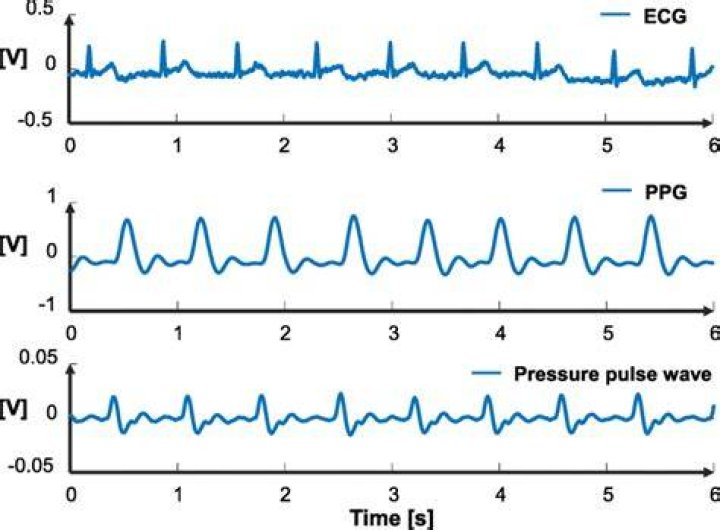
In recent years, extensive studies have been conducted on non-invasive and cuff-less BP estimation using photoplethysmography (PPG) signals. PPG is a non-invasive optical method for measuring blood volume changes per pulse. In other words, the PPG waveform represents the mechanical activity of the heart.
How do you convert specific gravity to PPG?
Convert specific gravity to mud weight in pounds per gallon (ppg) Mud weight in ppg = specific gravity (SG) × 8.33 Example: specific gravity = 1.50 mud wt, ppg = 1.50 × 8.33 mud wt = 12.5 ppg 2.
How do you calculate pressure from mud weight?
Hydrostatic pressure is calculated from mud weight and true vertical depth as follows: Hydrostatic pressure, psi = 0.052 x Mud Weight, lbm/gal x True Vertical Depth, ft. (To convert to SI units, 1.0 psi = 6.9 kPa.)
How do you calculate equivalent mud density?
The ECD is calculated as: d + P/(0.052*D), where d is the mud weight (ppg), P is the pressure drop in the annulus between depth D and surface (psi), and D is the true vertical depth (feet).
What is PPG measurement?
Photoplethysmography (PPG) is an uncomplicated and inexpensive optical measurement method that is often used for heart rate monitoring purposes. PPG is a non-invasive technology that uses a light source and a photodetector at the surface of skin to measure the volumetric variations of blood circulation.
How do you calculate hydrostatic pressure?
The pressure in a liquid at a given depth is called the hydrostatic pressure. This can be calculated using the hydrostatic equation: P = rho * g * d, where P is the pressure, rho is the density of the liquid, g is gravity (9.8 m/s^2) and d is the depth (or height) of the liquid.
How is PPG signal measured?
A PPG is often obtained by using a pulse oximeter which illuminates the skin and measures changes in light absorption. A conventional pulse oximeter monitors the perfusion of blood to the dermis and subcutaneous tissue of the skin.
How do you convert specific gravity to gallons?
This is all you need to convert from specific gravity to pounds per U.S. gallon. For example, the specific gravity of aluminum is 2.72, so its density is (2.72) • (8.345 lbs/U.S. gal) = 22.7 lbs/U.S. gal. In other words, if you have a U.S. gallon of aluminum, it will weigh 22.7 pounds.
How do you calculate Singapore slurry?
The density of the solids is stated as the Specific Gravity. This value, SGs, is determined by dividing the density of the solid by the density of water. The density of water is 1000 kg/m3 . The SG of water is 1,0 at 20°C.
How do you convert to PPG?
- Mud weight in ppg = specific gravity (SG) × 8.33.
- Mud weight in lb/ft3 = specific gravity × 62.4.
- Pressure gradient in psi/ft = specific gravity (SG) × 0.433.
- Mud weight in kg/m3 = specific gravity × 1000.
Article first time published on
How do you calculate bottom hole circulation pressure?
Pressure at bottom hole (reference at tubing) = (0.052×10,000×12.7) + 925+25 = 7554 psi. Determine Equivalent Circulating Density at bottom hole. ECD =7554 / (0.052 x 10,000) = 14.53 PPG.
How do you calculate annular pressure loss?
P= (1.4327 x 10—7) x MW x Lx V2 Dh — Dp where P = annular pressure losses, psi L = length, ft Dh = hole or casing ID, in. Example: Mud weight = 12.5 ppg Circulation rate = 350 gpm Drill pipe OD = 5.0 in. MW = mud weight, ppg V = annular velocity, ft/mm Dp = drill pipe or drill collar OD, in.
What is ppg density?
Abbreviation for density, pounds per gallon, more correctly written lbm/galUS. For example, the density of water is 8.33 ppg at 60 degF [16 degC].
How do you calculate hydrostatic pressure in a tank?
You can calculate the hydrostatic pressure of the liquid in a tank as the force per area for the area of the bottom of the tank as given by pressure = force/area units. In this case, the force would be the weight the liquid exerts on the bottom of the tank due to gravity.
How do I calculate well water pressure?
- Pressure (psi) = Force (lb) / Area in Square Inch (in 2)
- Mud Gradient ( Psi/ft ) = Mud weight ( PPG) x 0.052.
- Hydrostatic Pressure (HP) = Mud weight (PPG) x 0.052 x TVD (ft)
- Bottom Hole Pressure (BHP) = Hydrostatic Pressure (HP) + Surface Pressure (SP)
Can PPG measure blood pressure?
Recent publications showed that PPG alone may be used to monitor BP continuously. In our previous work, we found that in continuous monitoring, PPG-derived BP achieved an accuracy of 0.06 ± 7.08 mmHg for systolic blood pressure (SBP), and 0.01 ± 4.66 mmHg for diastolic blood pressure (DBP) with initial calibration7.
How do you process a PPG signal?
The PPG signal is extracted via an LED transmitter, which generates a red or infrared light that illuminates the skin on the fingertip, earlobe, or forehead. A photosensitive diode is used to measure the light absorbed by the body’s tissue over time, and these measurements can reflect changes in blood volume.
How do I get a PPG signal?
Green and red infrared light are often used to obtain PPG signals because of the difference in the wavelength; each light penetrates human tissue differently. Infrared light has the deepest penetration ability, and it can reflect the blood pulse from deep tissue.
What is PPG biosensor?
Smart wearables are integrated with PPG biosensors that are used to measure heart rate, blood oxygen saturation, and blood pressure. … COVID-19, like other viral illnesses, is associated with several physiological changes that can be tracked with wearable biosensors.
What is the frequency of PPG signal?
The pulse wave frequency values of the PPG signal is in the range of 0.5–4.0 Hz.
Is PPG a power signal?
The spectrum illustrates peaks at the fundamental frequency of 50 Hz as well as the second harmonic at 100 Hz. Photoplethysmography (PPG) is used to estimate the skin blood flow using infrared light.
How do I calculate water pressure in a pipe?
Plug the values you found in Steps 1 to 3 into this equation to find the water pressure: P = A + (L x G) where “P” represents the water pressure, “A” represents the atmospheric pressure at the water’s surface, “L” represents water density and “G” represents the gravitational acceleration.
What is the water pressure at 1000 meters?
As you descend into the ocean, pressure increases linearly with depth; there is an increase in pressure of 1 atm for every 10 m increase in depth. So at 1000 m depth the pressure would be 101 atm (100 atm of pressure due to the 1000 m depth, plus the 1 atm that is present at the surface).
How do u calculate pressure?
- To calculate pressure, you need to know two things:
- Pressure is calculated using this equation:
- pressure = force ÷ area.
How do you calculate slurry concentration?
- Weight of solids per 1000 BBLS liquid: (low) 470 lbs = 214 kg to (high) 908 kg.
- Volume of solids per 1000 BBLS liquid: 214/2650 = 0.081 m³ to 908/2650 = 0.343 m³
- Volume of 1000 BBLS liquid = 158.97 m³
- Volume fraction solids low: c = (0.081/(0.081+158.97)) = 5.093×10⁻⁴ (or 509 ppmv)
What is SG slurry?
The specific gravity of the solid is 4.27 and the specific gravity of the liquid is 1.12. Assume a 100 kg sample. SG (slurry) = 1.54.
How do you find slurry density?
Calculate density of a slurry. Slurry concentration by weight can be measured by evaporating a known weight of slurry – and measure the weight of dried solids.
How do you convert specific gravity to specific volume?
The “Specific Gravity” of a substance is the ratio of its mass to that of an equal volume of water at the same temperature and pressure. This is also the ratio of the densities of the two substances: SG = (mass of a volume V of a material)/(mass of a volume V of water) = (rMaterial/rWater).
What is the density of 1 gallon of water?
There are a few variables, such as temperature, that determine the weight of water, but for all practical purposes in waterworks mathematics, water weighs 8.34 pounds per gallon. The density (mass per unit volume) of water is 1.00.
How do you convert pounds of water to gallons?
To convert a pound measurement to a gallon measurement, divide the weight by 8.345404 times the density of the ingredient or material. Thus, the weight in gallons is equal to the pounds divided by 8.345404 times the density of the ingredient or material.
How many psi are in a gallon?
Pound/gallon (US)Psi/1000 Feet1 pound/gallon (US)51.948051948 psi/1000 feet2 pound/gallon (US)103.896103896 psi/1000 feet3 pound/gallon (US)155.844155844 psi/1000 feet5 pound/gallon (US)259.74025974 psi/1000 feet