What is SDA and XVDA
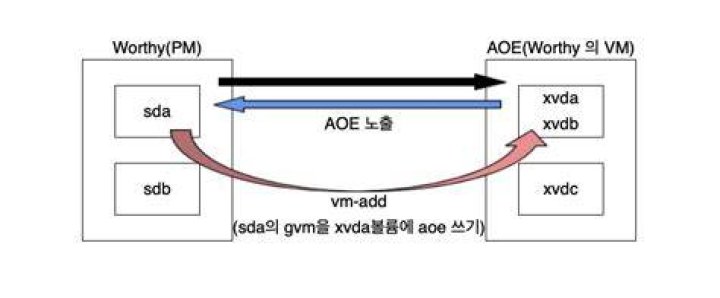
The /dev/sda device is provided for support of legacy devices and installations that don’t understand Xen native virtual disks. The /dev/xvda1 device is the native device and the one you should use.
What is the difference between XVDA and sda1?
“/dev/sda1” is reserved for ROOT Volume on both Windows and Linux. “xvd*” is recommended for EBS and Instance Store in Windows. “/dev/sd*” is recommended for EBS and Instance Store in Linux.
What is Dev VDC?
/dev/vda is the first detected paravirtualizated disk driver. It is faster than emulated sdX devices if both are referred to the same disk, because there are less overhead in its operation compared to an emulated drive.
How do I free up space on dev xvda1?
- Locating large files: sudo find / -type f -size +10M -exec ls -lh {} \;
- Deleting large files: /bin/rm -f <path-to-large-file>
What is Dev sda1 AWS?
/dev/sda1 and /dev/sda2 are the local ephemeral storage disks. If you look here you’ll see the various details about what’s mounted where.
What is Dev nvme0n1p2?
Your sudo fdisk -l output indicates /dev/nvme0n1p2 is an extended partition in classic DOS MBR-style partitioning. An extended partition can only contain logical partitions, not files as such. And in your case, it only contains /dev/nvme0n1p5 , which is a swap partition, containing no filesystem and so no files.
What is XVDF?
0 votes. answered Jul 6, 2019 by Akanksha (18.2k points) When you attach your volume to an instance, AWS provides a message saying: Note: Newer Linux kernels may rename your devices to /dev/xvdf through /dev/xvdp internally, even when the device name entered here (and shown in the details) is /dev/sdf through /dev/sdp.
What is Lsblk command?
lsblk lists information about all available or the specified block devices. The lsblk command reads the sysfs filesystem and udev db to gather information. … The command prints all block devices (except RAM disks) in a tree-like format by default. Use lsblk –help to get a list of all available columns.
How can I check how much free space left on my EBS volume?
- In the navigation pane, choose Instances.
- Select the instance.
- On the Storage tab, the Block devices section lists the volumes that are attached to the instance. To view information about a specific volume, choose its ID in the Volume ID column.
What is SDA and VDA?
Paravirtualization. /dev/sda is the first detected disk of IDE/SATA/SCSI type. In this case, emulated(full virtualized) by the hypervisor. /dev/vda is the first detected paravirtualizated disk driver. It is faster than emulated sdX devices.
Article first time published on
What are SDA and SDB?
dev/sda – The first SCSI disk SCSI ID address-wise. dev/sdb – The second SCSI disk address-wise and so on. … dev/hda – The primary disk on IDE primary controller.
What is Dev VDB?
vdb stands for vd second device b vd : Virtio Block Device b: second device with the above type. It is usually used in virtual machines like kvm and virt-manager from Virtio Disks. They will at at this form: /dev/vd[a-z][1-9] from redhat: Device naming.
How do I increase my AWS instance storage?
- From the Amazon EC2 console, choose Instances from the navigation pane.
- Select the instance that you want to expand. …
- Select the volume. …
- In the Size field, enter the Size. …
- Choose Modify, and then choose Yes.
What is the nitro hypervisor in AWS?
The Nitro Hypervisor is a lightweight hypervisor that manages memory and CPU allocation and delivers performance that is indistinguishable from bare metal.
What is EBS volumes in AWS?
An Amazon EBS volume is a durable, block-level storage device that you can attach to your instances. After you attach a volume to an instance, you can use it as you would use a physical hard drive. EBS volumes are flexible. … EBS volumes persist independently from the running life of an EC2 instance.
What is UUID in AWS?
UUID. The identifier of the event source mapping.
Can we attach EBS to running instance?
You can attach an available EBS volume to one or more of your instances that is in the same Availability Zone as the volume. For information about adding EBS volumes to your instance at launch, see Instance block device mapping.
How mount S3 bucket on EC2 Amazon Linux?
- USe Case:
- EC2 instance with root access or sudo access to install S3fs and mount volume. …
- Step 2: Update OS and install dependencies as mentioned in above pre-req.
- Step 3: Now change to extracted directory, compile and install s3fs source code.
What is Dev NVM?
The character device /dev/nvme0 is the NVME device controller, and block devices like /dev/nvme0n1 are the NVME storage namespaces: the devices you use for actual storage, which will behave essentially as disks.
Which SSD is better SATA or NVMe?
NVMe or Non-Volatile Memory Express is a super-fast way to access non-volatile memory. It can be around 2-7x faster than SATA SSDs. NVMe is designed to have up to 64,000 queues each capable of 64,000 commands at the same time!
What are dev loops?
/dev/loop* are loop devices making plain files accessible as block devices. They have nothing to do with RAM occupation. They are typically used for mounting disk images, in your case apparently for Ubuntu Snap. See this Wikipedia article for details.
How do I know if I have unattached EBS volumes?
- 01 Login to the AWS Management Console.
- 02 Navigate to EC2 dashboard at
- 03 In the navigation panel, under Elastic Block Store, click Volumes.
- 04 To identify any unattached EBS volumes, check their status under State column:
How do I access EBS volume?
- Stop the EC2 Instance.
- In the EC2 Web Console, click on the ‘root’ device (/dev/sda1) found in the Instance details.
- Make a note of the EBS ID (e.g. vol-12345678)
- Take a snapshot of the instance.
- Click on the EBS Volume ID to view the Elastic Block Store listing of the volume.
How do I find out who created my EBS volume?
Find the user name that created the EBS volume Open the CloudTrail console, and then choose Event history. In Filter, choose Resource name. In Enter resource name, paste the volume ID of your EBS volume, and then press Enter from your device. Expand the Event, and take note of the User name.
What is the difference between df and Lsblk?
lsblk lists all mass storage devices and partitions on them, including mounted file systems, unmounted file systems and devices without any file system. df ‘reports file system disk space usage’, which means that it lists mounted file systems and also file systems in RAM.
How mount Dev SDA Linux?
- Create the mount point: sudo mkdir -p /media/usb.
- Assuming that the USB drive uses the /dev/sdd1 device you can mount it to /media/usb directory by typing: sudo mount /dev/sdd1 /media/usb.
What is the output of Lsblk?
Lsblk is used to display details about block devices and these block devices(Except ram disk) are basically those files that represent devices connected to the pc. It queries /sys virtual file system and udev db to obtain information that it displays. And it basically displays output in a tree-like structure.
What is HDA and SDA in Linux?
The term sd stands for SCSI disk, that is to say, it means Small Computer System Interface disk. So, sda means the first SCSI hard disk. Likewise,/hda, the individual partition in the disk takes names as sda1, sda2, etc.. … The second hard disk will have the name /dev/sdb with the same numeric expressions.
Where can I find Dev SDB?
View Specific Disk Partition in Linux To view all partitions of specific hard disk use the option ‘-l’ with device name. For example, the following command will display all disk partitions of device /dev/sda. If you’ve different device names, simple write device name as /dev/sdb or /dev/sdc.
How do I access Dev SDB?
# Open a command-line terminal (select Applications > Accessories > Terminal), and then type the following command to mount /dev/sdb1 at /media/newhd/. You need to create a mount point using the mkdir command. This will be the location from which you will access the /dev/sdb1 drive.
What is sda1 sda2 sda3?
The partitions on each SCSI disk are represented by appending a decimal number to the disk name: sda1 and sda2 represent the first and second partitions of the first SCSI disk drive in your system. … If the sda drive has 3 partitions on it, these will be named sda1 , sda2 , and sda3 .